Unknown's avatar

About ContentRambler

Part time blogger, employee, mum, enjoying rambles around the country of content, social networks, and blogging. Marketing tourist.

Content harvest: apples, pears, completely bananas?

Now that I’ve started adding a dash of gardening to my content, more and more ideas pop up. Let’s see if there are useful weeds among them 😉

One question that occurred to me was:

Is there something like harvesting content?
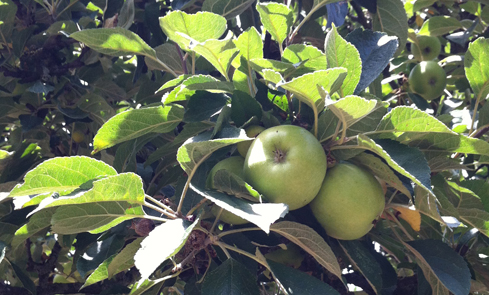
Content harvest: apples

I suppose it’s what you do in an organization with a lot of content creation going on in outlying regions. It’s also what you do when you’re scouring the internet looking for interesting bits of information you can then share through whatever means.

There are a few issues at harvest time of course.

  1. Some apples rot or get eaten while still on the tree. Unless you spray anything you don’t like into oblivion. But I’d like to eat apples, not chemical residues.
  2. Some apples fall before you get to them and get pecked by chickens and devoured by ants or other insects (one minuscule bite at a time).
  3. Other apples just seem to laugh at your efforts by not being worth picking. Even thought they started out looking quite promising, they haven’t ripened the way you’d like them to.

Once you’ve harvested your bits of content, you want to keep them dry and snug for a while to use when you’re ready.

So compare this with ideas for your blog. Sometimes you get plenty of ideas, sometimes it’s as though you get none at all. Jot down any idea when you have it and store it for later. In my case it really helps to get a few lines written so that later on, I won’t end up wondering why any specific idea seemed so interesting. You probably won’t use every single idea you had – some topics are too newsy to keep for a long time. But that’s fine, because you’ll have your ideas stacked all the way up to the ceiling and you’ll select anything you want to work on – when you’re ready to do so.

What do you do with all that content?

Well, that’s a bit of a luxury problem… one that anyone with a mature fruit tree will recognize.

  • Part of your ideas will be fine as they are. You’ll need to add very little to your initial idea.
  • Other ideas will need more work, especially if you left them for a while. You might end up with the content version of stuff like apple pies using your favorite content curation recipe.
  • Another part may have to go to your neighbors… you’ve got too much! This is when you consider sharing your ideas by going guest blogging – provided you also have the time and energy for that 🙂

Content lifecycles: cut flowers to annuals to perennials

How long does your content retain its original usefulness?

Looking at different websites I would say you can distinguish at least three types of content based on their longevity. Let’s liken them to plants, since the weather was still fine while I first drafted this post (no longer, alas).

Perennials in content Continue reading

Why all great content is useful

I’m convinced that all great content is useful in some way. But how would you define ‘useful’ in an everyday context?

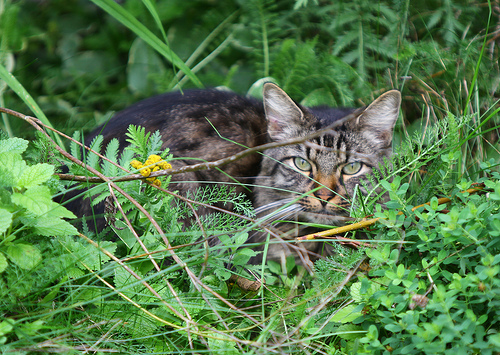
Is a cat useful content for your garden?

Would you consider a cat useful content for your garden? Photo on Flickr | Chris Waits

Take a look around you. What could be useful about the things you see? In the garden (where I’ve spent some time of late), useful could take on any of the following shapes Continue reading

Content management for small gardens

This post is about gardening. It’s also about content management. Let’s see how we can fit those two into the same yard.

Planting trees

Garden management and content management results

Last week I planted a tree. It’s not hugely expensive. Still, I worry about it. Sometimes I suspect I read too much. Has the following ever happened to you?

You know you need, say, a new pair of trousers. As luck would have it, all the stores sell the wrong type (the one that doesn’t fit or that makes a size six look like an overweight hippo). They do have nice shirts though, and you end up buying one of those.

Continue reading

An outsider’s view (more or less) of email marketing

Some time ago I noticed Maria Pergolino’article Reactivating your database – Key steps to getting your leads to re-engage. (Nov. 2012)

Now I’m sure Maria knows more about email marketing than I do. I’ve just started emailing newsletters as a part of my current job and I have only a vague notion of who the recipients are. Fortunately I’m learning as I go, so I’ll hopefully leave the stage of “random acts of marketing” behind me (term probably from @PamMarketingNut).

Spot your customer (butterfly playing hide-and-seek with birds)

Spot your customer (butterfly playing hide-and-seek with birds)

What works in email?

Despite my wafer-thin layer of experience in sending bulk emails, I’m at the receiving end of a number of email campaigns and I can say a couple of things about what works and what doesn’t in emails:

  1. Regular but not-too-regular updates via email are fine. If you sell good stuff at your store (we’re talking clothes here) you may expect your emails to be opened every once in a while.
  2. Your emails will get more attention if there’s genuinely interesting information in them. A bit of a no-brainer, unless you think providing only the smallest possible amount of information will trigger me to visit your website. It won’t.
  3. The right frequency is a matter of balance. Having to delete offers I’ve missed does not motivate me to buy anything from you. Getting several emails about a collection I can’t check out (no time) doesn’t work either.
  4. Some people don’t shop online for clothes. If they happen to live five minutes away from the shops and a lot of clothes aren’t the right fit they will visit your shop. And please, don’t expect anyone to print a discount offer you emailed to take with them to your store. (Does this still happen? If not, it’s because it was a bad idea.)
  5. Good subject lines work, but the actual email should deliver on the promise the subject line makes. Is this an open door? I hope so.
  6. Emails specifying there is only one day left for your special discount may work for students or single lads and ladies. Those of us with a husband and/or kids and a job won’t react so positively – unless you provide day care for the kids (husband).*

*I know – I’ve seen – parents do their version of parenting while jabbing at their phones or talking loudly about their day to an unseen friend.** Wondering where your kids are (in trouble) while trying on a new pair of whatnots doesn’t really work either (it derails any attempt at making a sensible decision).

**It’s not always what you think though. I had someone stare at me accusingly – someone who needed explaining that I was entering our appointment for a new passport into my calendar. I might have been messaging to my friends – but I’m just not that rude (unless people start staring at me accusingly).

Good in email (I think)

  1. Send them when they’re useful. You can have too much of a good thing.
  2. New collection? Fine, but make sure to add all the available colors/sizes/styles. Don’t just feature the most fashionable items and colors, especially if they’re oversized sweaters in pastels (the 1980’s were gruesome).
  3. Depending on your audience, send a reminder at least half a week before the end of your discount campaign. Some of us have meetings we can’t skip (well, we can, but that’s just the start of our problems).
  4. If you know where your customers are, use that information to improve your emails. Not as in “I know where you live” (I read a blog post some time ago about an email that got creepy) but you might shift your call-to-action according to what you think you know. If they live around the corner, “come check our web shop now” may not be a relevant trigger. Or it may be. It all depends on your customers.

Do you have any do’s or don’ts for email (marketing)? Any great or not-so-great experience with calls-to-action?

100 blog posts, or how to write and write again

Knowing like I know that there are plenty of bloggers out there who publish daily and/or have been longer at it and who must be so far beyond their 100th blog post they can’t even see it with a telescope on a clear day, still I can’t keep from wondering how I made it this far.

Too many ideas to write about…

100 blog posts ContentRamblerAt first I only published once a week. But I sat down to blog every single night, just to build a routine. I had so many ideas they wouldn’t fit into one post, I’d add and edit until I had several topics jumbled up into one blog post. That’s when I wrote How to add focus to every post 😉

Publishing twice a week worked for a while. I would have loved to publish more often but felt I would never get away from my blog if I went down that road.

…or too few

Continue reading

Blogging impressions: the muse of desperate bloggers

Since I started editing and publishing content produced by others in our company, I’ve found it harder to create my own content here on my blog. Spending a lot of time doing content-related tasks like editing, tagging, and the like, uses a lot of the available ‘content energy’.

Blogging is… work? Continue reading

The secret to getting things done

Don’t make things bigger than they are by labeling them with big words.

Change the company culture? Do a huge project?
Don’t. Not if you can help it.

Change management at the office

Change at the office | Image HikingArtist

Unless you have exactly the right people who will get things done without blinking. Because they know all the right people, and they know how to get those people to do whatever needs doing, and they definitely ‘know the ropes’. You know the type. It’s the type that’s rapidly approaching their retirement. In their stead, you get ‘really big project experts’. Six foot Sigma. Mean. The Artist Formerly Known As PRINCE2. They’ll get things done, in their own way. Continue reading

How to become the go-to expert for go-to experts

How do you become a go-to expert while still getting some work done?

Experts

Who do experts turn to? Image by Mai Le | Flickr

For individuals and organizations alike, having a wealth of knowledge sure helps if you want to be an expert for other experts to turn to.

However if you really know your stuff you may end up filling your days answering very similar questions – without getting to the bottom of a topic that has your genuine interest more than once every few months.

Add structure to your knowledge-sharing

There are a couple of ways to enhance your expert status in a more structured way:

  1. Organize networking and knowledge-sharing events. David Gurteen’s Knowledge Cafes come to mind – as part of a community.
  2. Provide training to experts
  3. Share your expertise online starting, if you’ve been answering questions for quite some time, with a couple of FAQs. There is no end of experts blogging themselves silly 🙂
  4. However, mind the amount of time you want to invest. You might want to get someone to interview you instead.

The advantage of documenting your knowledge in some form is that you can share it while you’re doing something else with your time. Like run a business based on your expertise. Or perhaps you could use your time listening to other people. Expertise should not be allowed to rest on its laurels.

Ultimate content: being the go-to expert for go-to experts

The ultimate expert is the one the experts turn to – the one who provides content they’ll happily recommend to anyone who will listen, because they really can’t add much to your overview. If this is your aim it means you need to get all of your facts right.

Mistakes ruin your reputation as an expert (need I even say it?)

Mistakes, even if you copy-pasted them from another website to save time, render your content useless and could turn your visitors away for good – because you lose trust when you mix facts with fiction. This is something I realized years ago: if you’re wrong about one fact, then it doesn’t matter if you’re right about all the other facts. (I also learned that people who can’t work with absolute accuracy should not be allowed to go near a database).

People can’t refer to your content as the ultimate source on the topic if you leave in a single mistake. Get your facts straight.

So review every detail with care. Content from obscure sources should be checked against not just your own knowledge but also against, say, your biggest competitor’s opinion or even several other websites. If they contradict one another, apply your own expertise, do more research, call in another expert, or leave that particular ‘fact’ alone.

What else would you recomment doing?

Quality content creation: for experts only?

After my earlier posts about content curation as a way to show the world (or the bit you’d be interested in having as a client) you’re an expert in, well, in your field of expertise, there’s the other side of things. Writing about stuff you don’t know anything about. How do you do that anyway? What’s more, how do you come up with content people will come back to again and again?

Cats in their favorite spot

Cats in their favorite spot [image by Tina Lawson – Flickr]

Content creation for non-experts

This article by Jason Acidre gives a few useful tips for non-expert content creators. Using FAQs and the like to make huge lists of ‘everything there is to know about X’ is one way to create great content even if you don’t know that much about a topic.

In fact, you could do more than use frequently asked questions from every competitor you can think of just to assemble a list.

What else can you use existing FAQs for?

You could use FAQs as questions in an interview and try to get a bit more information out of an expert than you might get from an online FAQ handily provided by your competitors. The great thing is you’re answering real questions from clients rather than making stuff up and hoping it’ll help someone out there in the big, big universe… well, you get my point.

  • There is much to be said for using information that’s already out there.
  • On the other hand, there is also value in providing the kind of content that’s not all over the web.

If you can’t provide unique content, then presenting highly useful information in a way that suits the needs of your audience should still give some of them a reason to store your article in their Favorites.

Adding value by transforming content

The way to add value to already useful information is probably in making that information ‘actionable’ – fit for immediate use. This rules out theoretical essays and models:

  • Your content should be almost a copy/paste kind of thing, or
  • It should be an overview so complete that no visitor to your website will need to look anywhere else ever again.
  • It should have extras not usually found in similar overviews. If your competitors are not in the habit of adding relevant links to their examples, you should. If other websites lack visual content to guide visitors through, that’s another extra you could add if you’re a visual content pro.

Favorite content

Lists and tables containing information people need repeatedly are often marked for later (re)reading. If you want to create other people’s favorite content it should be:

  1. Content provided by a known expert (organization)
  2. Content that has proved to be correct and complete.
  3. Content that is well-structured (‘at a glance’).

How do you know if people have favorited a specific piece of content?

Depending on the topic, users of your content will visit your page every month or every week – maybe even every day, where other pages tend to get far fewer views apart from a peak whenever you draw attention to them. Your stats will end up showing a wavy line going up and down and – importantly – up again after every down for quite some time.

If you notice this type of pattern in the stats for a page with a sell-by date, you’ll need to follow up with a new piece of content. Link to your new content from your old page and vice versa.

If you get your facts straight your article could become a regular landing page for a number of your website’s visitors. Where would you like them to go from there?