Time to update your resume (and find the right job, part 2)

A while ago I wrote about your LinkedIn profile and LinkedIn summary and so on. But what about the old-fashioned resume? Is it gone forever?
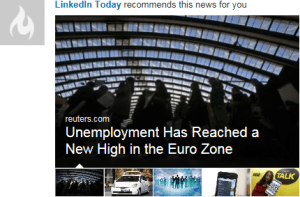
Job News On LinkedIn. How's your resume?

My News On LinkedIn Today
[click link to read the article]

Somehow I doubt that. But LinkedIn is a great place to organize your resume if you’ve never bothered to do so – or if it’s been a long time so you feel as though you’re starting from scratch.

If you want to apply for a job using video, it’s worth reviewing your previous activities. In a way, your resume is just a way of keeping score – a means to an end.

It’s worth reviewing your past employments through the eyes of your potential employer. What are they about, and how do you fit into their picture?

Update your resume: mind your language

If you’ve been (un)employed for a long time, getting back into the old resume-making routine (was it ever a routine?) may cause you to create sentences with a vocabulary that was out of fashion well before the 21st century started.

Size up your future employer:

  • What clues does the company website yield about the nature of the organization and its employees, language-wise?
  • Check the LinkedIn profiles of a few employees to enhance the picture.

In very formal organizations, little may have changed over the years. Everywhere else is a different matter. Don’t use the language you would have used twenty years ago.

Resume add-on? Writing your motivational letter

The letter or video to go with your resume should contain as little as possible from your resume. This is where you show your potential employer:

  1. Who you are as a professional and what you’ll bring to the company.
  2. No less important is what you’ll get from the company.

#1: What can they expect in terms of skills, knowledge, and work attitude? Don’t put anything in there that’s not you. I don’t just mean inventing skills you don’t have, but also presenting yourself as more proactive, or more pliable, than you really are.

Tip: being turned down for who you are is bad enough. Don’t get turned down for trying to be like someone else. I’ll admit this sounds like dating advice 😉

Does #2 sound odd? How about getting the chance to do new projects, meeting new people, or making sense of the organizational mess they’ve made? What a company has to offer you is working experience. Lots of it. If it’s the right kind of experience, so much the better. If not, keep the valuable bits of your newly found knowledge and run.

After a friend of mine left a company he said: “That was a complete waste of my time”. It wasn’t. He’ll never, EVER, apply for a job in that branche again, or for that type of job, without being aware of the potential pitfalls. It’s that easy. Next time you’ll know better. Unless you fail to learn.

What have you learned from your previous job?

How a content strategy will help your blogging career

Suppose you want to turn blogging – or let’s call it content creation – into a career. The first thing it means is that you need a business attitude at least where it comes to how much content you’ll create about what topic(s). What you really need is some kind of plan for your content.

A Content Strategy is important for your blogging career. So is Meditation. Relax...

What are the characteristics of a (good) content strategy anyway? I ran into a nice, possibly helpful definition on Business2Community, to which I’ve decided to add my own perspective in this post.

A content strategy for your blogging career

Having a content strategy means you

  • deliberately create content
  • which you have optimized for search. This means that you base your content on keyword phrases that drive ‘organic search traffic’ (and conversions) – this is what the article I mentioned focuses on,
  • that demonstrates an understanding of your potential customer’s knowledge acquisition at various stages in their buying cycle. Don’t worry, I’ll explain later 😉

This means you don’t write whatever you like – a different approach from what you’d do on a personal blog. Instead, you start by finding out what keyword phrases your potential customers are probably using to find the information they need.

What kind of content is your potential customer looking for?

Put yourself into your customers’ shoes for a moment. What information you need depends on several aspects:

  1. Whether you’re already familiar with a type of product or service. Do you need to know what different smartphones do, or do you own one and do you want to compare the latest smartphones with yours?
  2. Whether you’ve already decided which product or service you want, or from which company you’ll buy.
    1. You may want to compare prices to get the best deal regardless of the brand so long as the product meets your demands.
    2. Or you know what product you want. All you need to know is which site or company offers you the best deal.
    3. Or you’re fed up with the lousy service you’ve had from company X and you need to make sure you find a company that does know that “customer service” contains the word “service” for a reason.

Every different situation means you’ll be using different keywords while looking for information.

A content strategy that is optimized for search means you take your potential customers’ search behavior into account even before you start creating content for your blog (or website).

What do you know about your potential customers? Can you ask any of the customers you already have?

Delivering your content to your potential customers

Next: you deliver your “optimized” content to your potential customers in a relevant and compelling way.

What is relevant depends on what your readers and/or your potential customers are looking for, not what you feel is important for you to tell the world.

Compelling is a word I’ve seen too often since I started reading about content marketing, and relevance takes care of a lot. True, it doesn’t help if you analyze quite interesting stuff down to the level of atoms for potential customers who either want you to help them or to entertain them. On the other hand, maybe you’re doing exactly the right thing to attract the people you need for your business. Do you know?

What kinds of content can you deliver on your blog?

A couple of categories of content that could work in the context of your blog are:

  1. Case studies that show how you dealt with a particular kind of issue. This lets people know what to expect from you.
  2. The ‘how to’ posts are familiar and they can be quite popular. However a post doesn’t become popular just because the title starts with “How to…”. Again, relevance to your potential customers matters most.
  3. White papers that give in-depth information to those readers you’ve selected as possibly interested in more than the average blog post.
  4. News about events you attend or organize, so people know where/when to find you.

Final considerations for a blogging career

If you’re serious about a blogging career you also need to consider which format suits your potential customers, and where they hang out for preference.

  • Are they the reading kind or do they prefer video?
  • Do they write lengthy comments on your blog or do they drop a short line on Twitter?

If, like me, you’re writing for the fun of writing, or to help your thinking process along, these considerations are probably not for you. But if you’ve decided to try to make money blogging, you’ll need to cater for your potential customers’ preference rather than stay in your own cosy comfort zone wondering where they went.

Why you don’t want this job – and how to get the right job, part 1

My previous ‘career’ post was about leaving your job. On the flip side is getting a new job (hopefully). If you’re looking for a job, hearing me say “you don’t want this job” probably sounds balony. So – is it?

Do your homework, get a job

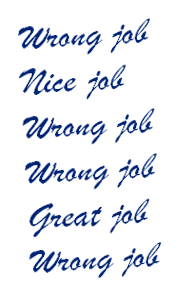
Your Career: Right Job Or Wrong Job

Right Job Or Wrong Job?
Only you can tell. Hopefully

This is what most of us consider normal nowadays: do some research into your potential employer. View a couple of LinkedIn profiles of people who work there – maybe you’ll find one of them even blogs. You’ll get to know a lot about the people who may become your coworkers. So far, so good.

But what if you’re so good at job interviews you land the wrong job?

Thanks to a comment I got thinking about this. Some of us are just too competitive. Landing a job becomes a sport in itself. Or you’re applying for every job you can think of just to get the money rolling in. Then you get an offer. One offer.

Your future employer maybe made the job sound a bit more glamorous than it really is. This happens to any job that contains a lot of routine work. Employers dial up the interesting bits, and dial down the days and days you’ll spend staring at a screen churning out numbers or client data.

How to get the right job

Start by getting a clear picture of what you want from a job – apart from the money. Even if you feel this isn’t the right time to be getting critical, you need a reference point to tell if a job is 80% your kind of job, 50%, or only 20% (you’ll probably spot that last one effortlessly).

Check if your estimate is right at your job interview. The match determines how fast you’ll be looking for your next job.

Questions to ask yourself:

What do I love to do?

In my case, I wanted to become an archaeologist when I was a kid. Leakey-style. Digging in the sand to unearth the most amazing fossils. As an adult, I dug around in archives and found some beautiful specimens 😉

I still enjoy combing the long beach of the internet for interesting stuff, and building sand castles on my blog. The nature of a specific job doesn’t change what I love to do.

What do you enjoy doing? What’s the common denominator in your life and career?

What do I have to offer to this potential employer?

How can you help this particular organization doing this job? What are your strengths? What knowledge have you already gained? Sometimes you think you have an answer and you’ll find that your future employer has different ideas of what you have to offer.

I was called “over qualified” so I depended on employers who would let me prove I wouldn’t run away screaming after a few weeks. Then one day I ran into an organization where affinity with art actually helped me get a job over several other candidates who had applied before me. And I didn’t know my background had triggered their interest until the job interview.

Tip: be careful what you leave out of your resume.

What does this job have to offer for my career?

Let’s break this one up into a few pieces:

  1. What tasks does this job entail that are part of the career I would like?
  2. How much time will I be able to spend on those tasks?
  3. What new experience will I gain doing all this?
  4. And a tricky one, do I have a specific goal for the next few years?
  5. If the answer to #4 is yes, how long (minimum) do I want to stay?

Tip for #4: At the organization that offered me an archiving job I could also do the research for my part-time study. That saved me an internship that would have meant little income for months. Did I mention this at my interview? Yes.

Tip for #5 (or 4B): Be prepared for this question. Your potential employer wants to know if you’re worth investing time and training – if you’ll stick around for a while after you reach your own goal.

Read more:

An article on Exertusjobs aimed at anyone over 50. But I’d say you can read it if you’re younger.

An earlier career post I wrote on this blog.

You may have gathered I got the job in spite of, or thanks to, my honesty. It was a what-you-see-is-what-you-get deal. It worked for me. What works for you?

Blogging impressions: using images on your blog

It’s been a while since I wrote a ‘Blogging Impressions’ post. Here goes.

You may have noticed I’m a writing blogger… Even so, I like to have an image with every post on my blog.

Blogging Images for your blog

Pros of images on your blog

  1. It’s good for SEO (search engine optimization). Provided you add key words in the ‘alt’ (alternative text) box.
  2. It adds interest.
  3. You may even add your personal twist through the description.

Cons

  1. It takes time to find the right picture(s), unless it’s part of your daily activities anyway, and in business topics, to come up with an original picture which you can still use in a sensible way to enhance your post. Is anyone fed up with pictures of keyboards with a key saying anything from “Sell” to “Engage” yet?
  2. Time. To upload. To fill all the ‘metadata’. To add a description that bridges the gap between text and image in a meaningful way.
  3. Did I mention ‘time’? I’m a bit short right now 😉

Ways to find the right images for your blog

So far I’ve tried several approaches for images (call it “visual content”) on my blog:

  • Making them myself using PowerPoint. The results vary enormously depending on the time I have left when I decide to make an image rather than looking for one.
  • Taking pictures. I’m still learning when it comes to producing my own visual content in any form: whether it’s a cartoon, or a photograph. I keep practising though, but on my last holiday I completely forgot the camera I got last Christmas. The photograph I’ve added is one I made using an iPhone (4, in case you wondered). I halved its size before adding it to my blog.
  • Looking for them on Flickr – either in the “Creative Commons” section or by adding “Creative commons” to my search terms.
  • Looking for them on Flickr, specifically in the photos added by fellow blogger HikingArtist.com – perfect for blogs dealing with business or nature.

How do you get the right images for whatever content you want to share on your blog?

How to change the minds of experienced professionals

Have you ever suggested what you considered to be a minor change to an experienced professional, only to watch them go ballistic? Somehow not everyone likes changes to the way they work – not even if you leave out words like “change”, “improve”, or “different”.

In this post I’ll show you how you could handle this kind of situation – by sharing some experiences from when I did an archiving project.

One common mistake when introducing a change to experienced professionals

You forgot it’s a change to someone’s work – a big deal for them.

How to help experience professionals change

Change: where to stop, how to go forward?

Just because you know what needs to be done doesn’t mean everyone else knows about your plan, or agrees. You’re going to have to convince them no matter what their manager has told you.

Our team’s project goal was to structure and clean out the team archives. The biggest bunch of paper was kept by someone who didn’t care what his manager thought. A previous undiplomatic attempt to clean things up had not improved his temper.

Why do people react so negatively to change?

People build a set of actions that they know will work most of the time. It’s called experience. Telling them to change is like yanking the chair out from under them. I wrote about the way change projects can go wrong in an earlier post.

In my experience, a lot of resistance comes from people who are very much involved. They have made it their personal responsibility to safeguard certain knowledge.

It’s just a set of procedures. What’s so hard about following rules?

Maybe you feel you’re only following the (new) rules. But rules aren’t people.

Experienced professionals know that many new rules and projects will go away after a while, leaving things pretty much the way they were with a few minor tweaks. If you make a lot of noise, some people will wait for you to leave and for the dust to settle after your exit.

Back to the archives: I knew our objectives. And then I let an individual employee get away with about half a dozen exceptions to our rules. Why? Because I needed the person’s cooperation and even goodwill. That’s why.

Importantly, I didn’t break or even bend any rules. I just:

  1. made sure to ‘weed’ the files as lightly as possible, so anyone could reconstruct the process that had produced an important final document.
  2. stressed the potential importance of the files so we’d have to keep them secure for longer. Within that time those files would probably be digitized, and kept for ever. If not, the ‘keeper of the keys’ would be retired before anything happened. Even he could agree that he wouldn’t be guarding the archives past the age of 70.
  3. personally guaranteed to our seasoned professional he’d be able to access the files whenever he asked to.

How do you convince experienced professionals who don’t want change?

Convincing experienced, critical, ‘difficult’ professionals is the only way to move forward without being pushed back in ways you never anticipated. For this you need to understand the role a person sees him/herself in.

For best results, leave people’s professional identity intact.

How content management will help your content strategy

How is content management related to content strategy? And how can content management help your content strategy? The answer to the first question differs depending on your professional background.

Before going into the connection between content management and content strategy, here is how I see the two in their respective roles.

What is content management?

Content Management - Content Strategy - Content Planning

A content inventory allows you to find content gaps and planning to fill them

Content management inside an organization is pretty much an administrative role.

Although content management systems (CMS) help you structure the content your organization has, the role of content manager hasn’t gone away – people who have trouble structuring information generally find the cure, or system, worse than the disease.

Not getting your categories, keywords, tags sorted means you and your coworkers will have a hard time finding stuff back. It’s a major reason why many people keep their own little archive – to make sure the information that matters most to them, or even to their coworkers, won’t get lost.

What is content strategy?

Content strategy is a word from the realm of content marketing – just like search engine optimization (SEO). Content marketing is about how and when to bring your message to your audience.

Some basic content marketing questions are:

  • What audiences do you want to attract?
  • What does their customer journey look like?
  • What kind of information do they need at various moments?

Your content strategy is also about more fundamental issues, like defining what you will share at all and why (not). This means structuring what you have and planning what you don’t yet have.

The article “How to build online engagement with health care communities” makes clear that you should realize who you, the organization (or person) providing content to your audiences, are.

  • What types of content you can offer to what audience flows from your organization’s identity – the roles you play in the careers and lives of your various audiences.
  • Then there’s the topics you want to publish about – the services or products your organization offers. Which topics can you share with which audience?

How will content management help your content strategy?

Any decent kind of content management (using tags and the like) will help you take inventory of the content you’re already publishing. The first time you see your content inventory and your content strategy laid out side by side – what you have versus what you should have – you’ll probably find quite a few gaps in your published content. These gaps are the should haves you don’t have yet.

You may also find that your content management is fine in traditional (administrative) terms. Thinking ahead in order for your content to be found later on is part of content management. You may still need to look at your content (tags and all) and wonder: where is my customer? If you can’t find them, make sure you put them in.

Next step: use your new knowledge to fill in the content gaps

You now have a good view of your content landscape. Simply put, what you do next is: fill in the content gaps, add tags that make sense to you and to your audiences, and plan ahead to keep the flow of content going.

Why tools fail: learning curve in knowledge management

Getting to know a tool for knowledge management – or for anything which sounds as if your organization should be doing it – is like receiving a present. It’s gift-wrapped and looks very promising on the outside. But there is an issue.

Big Tools for Knowledge Management?

Using Big Bait for Knowledge Management? – Flickr | HikingArtist.com

Continue reading

The temporary teacher – education by subject matter experts

Education matters to me. Not least because I spent about 20 years at a school of some description. And learning new things is my favorite passtime, especially at work 😉

What will education look like in the future? What will that mean for teachers? And how will the pupils fare under the new educational practice?

Education by specialists: the temporary teacher

Temporary teacher: Education by Subject Matter Experts

Subject Matter Experts On The Loose – HikingArtist.com; Flickr image

Continue reading

How to leave your job in an orderly fashion

Writing as I am at a table in a home in the Netherlands, the abdication by our queen and subsequent coronation of her son is something which makes me wonder how you prepare your successor for a job you’ve had for a long time – possibly decades, although that doesn’t happen very often.

Leave Your Job In An Orderly Fashion

Harvest [click to view image by Vilseskogen on Flickr]

With many jobs, the role remains in some shape where the individuals leave. Unless we run a family business, we don’t (consciously) prepare our children to do our own job – to become our successors.

So how do we prepare our jobs to be taken over by successors we may hardly know?

How to leave your job in an orderly fashion

I’ve left a few jobs behind me over the years, though not one I’d done for 30-odd years. Even so I’ve learned a couple of things so far about handing over your tasks to your successor. Here’s my pick-and-mix harvest:

  1. Don’t postpone documenting your tasks until you can see the exit outlined. Make documenting essential procedures a normal part of your routine. It’ll give you something to refer interns or new coworkers to. If anything changes, you’ll be able to check (and show) quickly where your own tasks are affected.
  2. List every task you can think of and write down everything worth knowing for every task on your list. (check if current procedures are up to date)
  3. Make sure you distinguish between priorities #1 and the rest. Don’t pretend everything you do is equally important.
  4. Don’t believe for a second you’ll be able to document 100% of what you do, how you do it, and why you do it.
  5. Don’t believe for a second that nothing will or should change after you leave. You’ll give them a way to keep going without you, until they decide to do things differently.
  6. If you remember why you follow a certain procedure, add your reasons. Those reasons will help your successor understand why a seemingly dull task is important – and if they change anything, they’ll know what to keep or whom to check with before they skip that part.
  7. For preference, have your successor in place before you leave. If you can’t, haul in a coworker who’s not about to leave in the next month or so and have them perform the most essential task from your list. Then improve your documentation accordingly. Including: “If you’re not sure, ask Jake.”
  8. Depending what branch you’re working in (at your next job) give your successor anywhere from 2 days to 1 month to call you if they have any questions.
  9. Leave.

This is all under the assumption that you and your employer are on good terms when you leave.

A royal exit for everyone

Whether or not you were happy at the job you leave behind, don’t make enemies on the way out. If you hated everything about your job, smile on your way to the door. You’re leaving, remember? You can afford to give your ex-colleagues a final royal wave.

How have you left your previous job(s)? Have I left any important bits out?